CNC manufacturing in the electric mobility transition
Electromobility is fundamentally changing the requirements for CNC manufacturers. While combustion engines will remain relevant in the medium term, the focus of manufacturing is shifting to electric motors, battery housings, and power electronics. The challenge: CNC companies must master both worlds in parallel while investing in new technologies. Companies that focus on flexible manufacturing systems, process integration, and digital transparency will successfully navigate this change.
Understanding new components
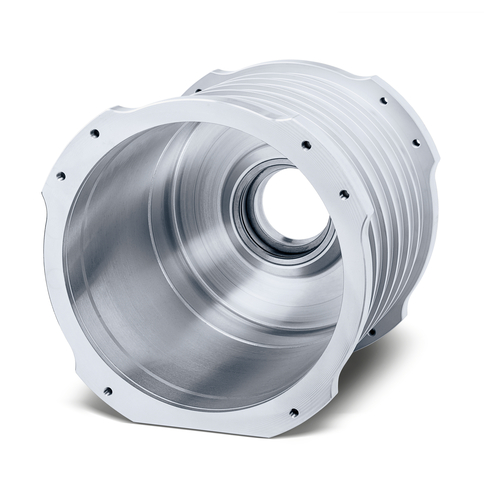
A key feature of this change is the expanded range of services that manufacturers and suppliers must provide. Crankshafts, cylinder heads, and camshafts give way to completely different components and thus new requirements. Rotors and stators for electric motors, for example, require precision in the micrometer range, as even minimal deviations impair motor efficiency. The manufacture of battery housings involves the precise and efficient machining of large-area lightweight structures. New applications such as these make it clear that pure machining will become increasingly insufficient in the future. The increasing variety of components and a broader range of materials—aluminum and composites are gaining in importance—require flexibility and a holistic approach to processes, from design and the selection of the right tools and cutting parameters to the actual machining and finishing.
Mastering technological requirements
The stricter precision requirements are reflected in tolerances in the micrometer range. By comparison, conventional drives often accept accuracies of 0.01 to 0.05 mm. This means that high-precision machines in a temperature-stable production environment are becoming increasingly important. In-process measurement is also progressively being integrated into the machine's workspace to ensure consistent quality. This reduces the number of rejected parts and at the same time relieves the burden on downstream quality control. In addition, continuous measurement processes have become an important tool for quality documentation. This is because manufacturers in the automotive industry are now demanding digital process transparency more than ever before.
Integrated processes 5-axis machining
5-axis machining is also becoming established as the standard. It enables the complete production of complex geometries in a single clamping and eliminates quality risks caused by multiple clamping. At the same time, it forms the basis for process integration, which encompasses more than just measurement. Modern machining centers combine turning, milling, and drilling in a single setup, as well as gear cutting and grinding. This eliminates the need for separate, specialized machines and creates additional capacity. Holistic automation solutions, which are increasingly becoming the be-all and end-all of economical production, also integrate additional work steps such as component cleaning.
Flexibility as a survival factor
The enormous variety of components is partly a result of the numerous vehicle platforms, performance classes, and battery concepts. On the other hand, rapid technological progress in electromobility is shortening product life cycles. This requires highly flexible manufacturing from CNC companies. Machines with a modular design allow quick adaptation to new requirements, while automation solutions are becoming increasingly versatile. This enables them to handle different components quickly and easily, even with smaller batch sizes. This agility contributes significantly to maintaining economical production—especially in the wake of the shift toward greater electromobility.
Sustainability as a competitive advantage
Electromobility aims to protect the climate – primarily through the use of vehicles, but manufacturers are also looking at the entire supply chain. They demand verifiably sustainable manufacturing processes and CO₂ balances from their suppliers. For CNC machining, this means that modern, energy-efficient machines are a decisive criterion in the design of holistic manufacturing solutions. They consume less electricity and benefit from intelligent recycling of cooling lubricants. Precise and quality-oriented machining also reduces material consumption, and efficient chip recycling conserves resources.
Expand business areas

The high demand for components for electromobility is also leading companies to expand their range of services. As a partner in both development and series production, PWS Presswerk Struthütten GmbH from Neunkirchen supplies the automotive industry, among others. With an order for the production of floor parts for hybrid vehicle batteries, PWS also entered the field of machining in 2022. The highly automated precision manufacturing of these components is carried out on a total of four NHX 8000 machines, which DMG MORI has connected via MATRIS – a flexible modular robot system for workpiece and pallet handling. Productive automation includes the handling of the plates from the raw part through production, washing, quality inspection, and deburring to the final, unique marking of the components. The manufacturing solution is designed to be so flexible that it will also be able to economically mass-produce other components in the future.
Qualification is decisive

Despite all the advances in manufacturing technology, the production of components for electromobility remains a task for highly qualified specialists with interdisciplinary skills. Mechanical understanding, material knowledge, and digital competence must come together. The training and further education of these specialists—for example, in 5-axis programming or process digitization—is therefore becoming an increasingly important issue for CNC companies. To remain successful, they must systematically invest in such qualifications: through training courses at machine manufacturers, e-learning platforms, and job rotation between different manufacturing areas. This not only secures the necessary skills but also increases their attractiveness as employers.
Looking to the future
Short term (0-12 months):
Inventory of own competencies with regard to e-mobility requirements
Pilot projects with e-mobility components to gain experience
Employee training in 5-axis machining and new materials
Establishing contact with e-mobility OEMs and Tier 1 suppliers
Medium term (1-3 years):
Investment in flexible 5-axis machining centers with process integration
Development of digital infrastructure for process monitoring and MES
Development of sustainability concepts with measurable goals
Networking with other manufacturers to exchange experiences
Long term (3-5 years):
Full integration of automation and digitization
Positioning as a specialist for defined e-mobility components
Expansion of engineering expertise for active design support
CO₂-neutral production as a competitive advantage
The transition to electromobility is both a challenge and an opportunity. CNC companies that invest early in technology, training, and processes secure long-term competitive advantages in a growing market. DMG MORI supports such companies on this path with innovative and comprehensive manufacturing solutions that will continue to meet increasing demands in the future. Efficient machining strategies with a high degree of process integration, automated handling for flexible series production, and consistently digitized processes form the foundation for sustainable and enduringly successful production.
